
When No One Else Answers
Everyone could see it. Nobody could fix it.
Back to Journal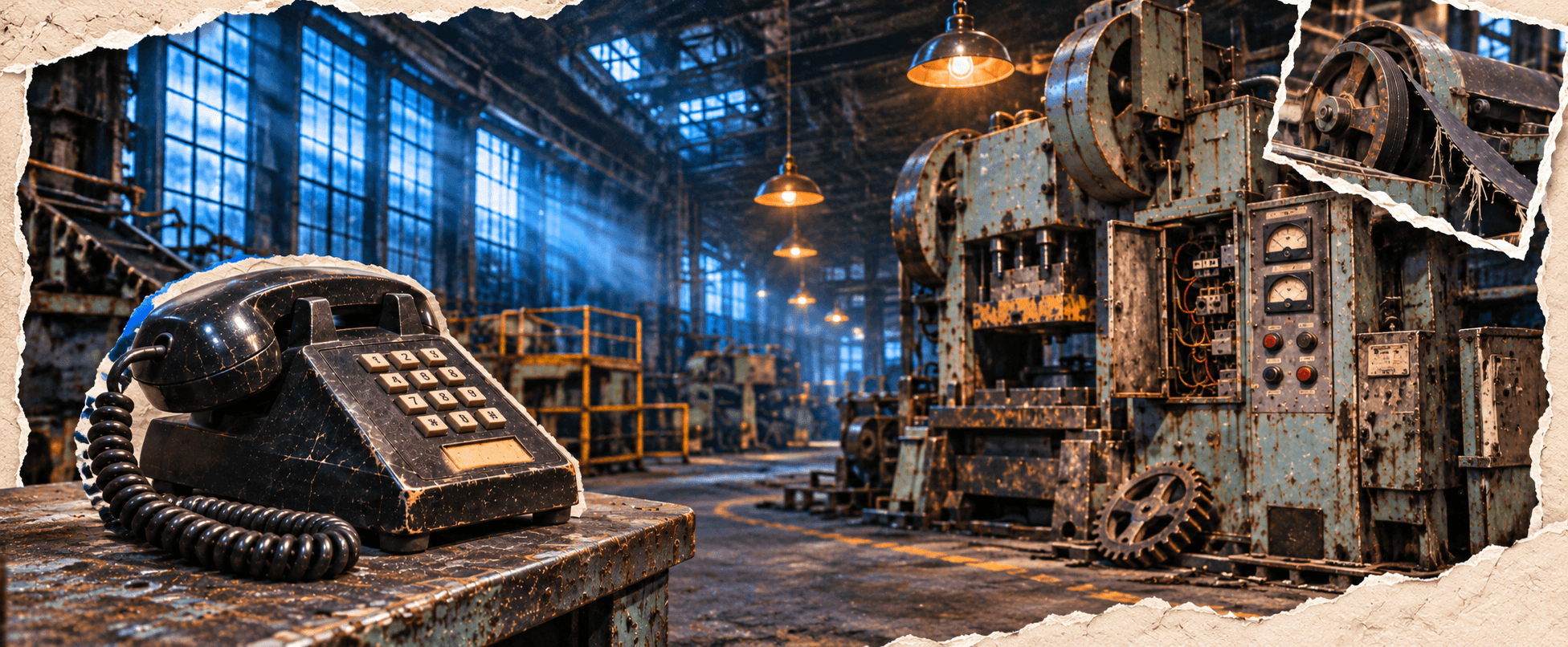
In 1987, Paul O’Neill became CEO of Alcoa, one of the biggest aluminum companies in the world.
As he visited factories, he asked a question: When a machine broke or something became dangerous, how quickly did it get fixed?
The workers on the floor saw it first. Then the worker told the supervisor, the supervisor told the manager, and the manager reported it to the top.
Digging deeper, he saw how long that process could take to get equipment fixed.
The gap
O’Neill went to an Alcoa plant in Tennessee and sat down with managers, supervisors, and union leaders. He told the managers to fix any risk right away. “We’re not going to budget for safety at Alcoa,” he said.
Then he did something few CEOs would do.
He gave the hourly workers his home phone number. If you see a hazard that hasn’t been fixed, he told them, call me.
The call
Late one night, his phone rang.
Part of the conveyor had broken. Workers were moving 600-pound blocks of aluminum around the broken section themselves. They were afraid someone would get hurt.
O’Neill called the plant manager.
By about 4 a.m., it was fixed.
The gap closed
The broken conveyor wasn’t a secret. Everyone who walked by it could see it.
But nobody with the power to fix it had done anything.
One phone call closed that gap.
Word spread through the company. “So I didn’t have to go do that at every plant, because the people got it,” O’Neill said.
Then he made it the rule. Every Alcoa plant had to report injuries and incidents within 24 hours, along with the cause and the fix.
Over his 13 years as CEO, Alcoa’s lost-workday rate fell from 1.86 to 0.23. The company’s value grew from $3 billion to $27.5 billion. Safety wasn’t the only reason for that growth. But O’Neill proved that seeing problems faster didn’t slow the company down.
Your shop’s broken conveyor
Every shop has one.
A customer cancels. The dispatcher knows. The tech doesn’t. So the truck sits empty.
A tech sees a water heater that’s about to go. He tells the homeowner, but not the office. Another shop gets that job.
A customer hangs up mad. The CSR knows. You find out when the one-star review shows up.
Someone always knows. The person who can fix it usually finds out too late.
That’s the Visibility Gap: the time between when something happens in your shop and when you find out. The bigger the gap, the less time you have to act.
Your Moneyball move: Pick one problem. Cancellations, calls that didn’t book, or callbacks. Then ask, “When this happens, how long until someone acts?”
Set your rule, the way O’Neill did. Tell your team, “When this happens and it doesn’t get fixed within 24 hours, call me.”
Close the gap.
That’s Moneyball for the Trades.
In Chapter 4 of Moneyball for the Trades®, you’ll learn how one owner stopped running his shop on last week’s news.
How much money is your shop losing to problems nobody fixes in time? Find out in the Recovery Game.
Sources: EHS Today, “NSC 2013: O’Neill Exemplifies Safety Leadership,” October 3, 2013 (home phone number, Tennessee plant, “We’re not going to budget for safety,” the conveyor call and the 4 a.m. repair, “the people got it,” the 24-hour rule, lost-workday rate 1.86 to 0.23, value $3 billion to $27.5 billion): Read source - IndustryWeek, “Profits Should Not Come at the Cost of Workplace Safety,” November 4, 2016 (O’Neill’s note telling workers to call him at home if managers didn’t follow up on safety): Read source